Nov 30, 2025
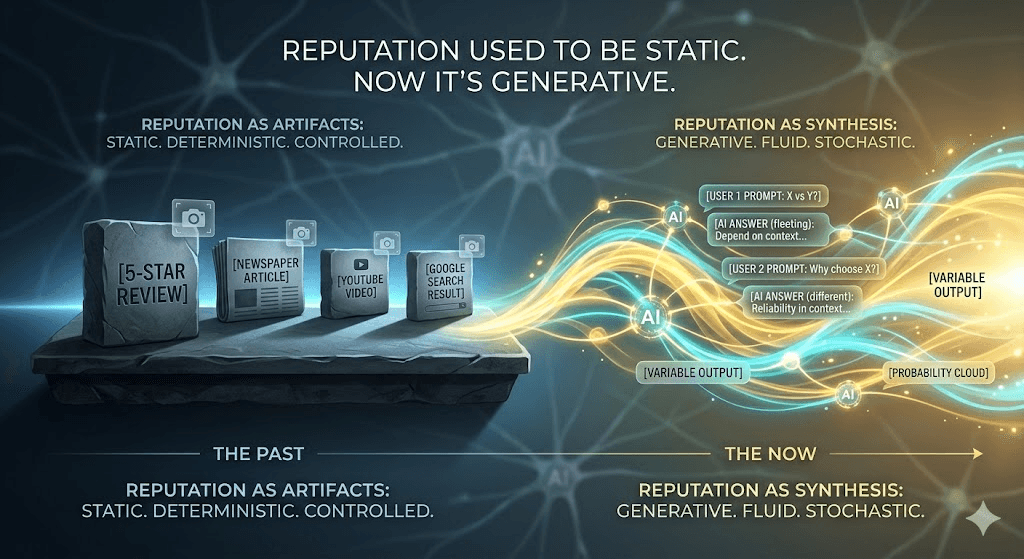
Brand marketers are used to managing reputation in fixed places.
A press article is written once.
A review is posted and stays put.
A social post can be monitored, responded to, or taken down.
Even when reputation is messy, it’s observable.
Large Language Models (LLMs) fundamentally change this.
They don’t store brand narratives as content.
They generate them dynamically, every time someone asks a question.
That single difference creates an entirely new reputation problem.
Reputation Used to Be Static. Now It’s Generative.
In traditional channels, brand perception lives in artifacts:
Articles
Reviews
Videos
Search results
You can screenshot them.
You can link to them.
You can point to exactly what was said.
Inside tools like ChatGPT, there is no fixed artifact.
When a user asks:
“How does Brand X compare to Brand Y?”
The answer:
Is created on the spot
Depends on phrasing, context, and prior turns
May differ subtly for different users
There is no canonical version of “what the AI says about your brand.”
That alone should change how marketers think about reputation.
Why Dynamic Generation Breaks Traditional Reputation Playbooks
PR teams know how to respond to an article.
Review teams know how to address a bad rating.
Social teams know how to manage comments.
All of those workflows assume something stable exists.
LLMs break that assumption.
You can’t:
“Reply” to an AI answer
Request a correction
Publish a rebuttal
Ask for a takedown
The narrative isn’t written once.
It’s performed repeatedly.
Each performance is slightly different, but guided by the same underlying mental model of your brand.
LLMs Don’t Repeat Content. They Reconstruct Meaning.
This is the subtle but critical shift.
LLMs aren’t pulling a paragraph about your brand from a database.
They’re assembling a story from:
Patterns learned during training
Repeated framings across the internet
Implicit judgments about strengths and weaknesses
That’s why answers sound balanced:
“Strong at A, weaker at B.”
“Good fit for X, less ideal for Y.”
To the user, this feels thoughtful and neutral.
To a brand marketer, it means:
Your brand has been abstracted into a set of traits.
And those traits are what get recombined, endlessly, in real time.
The New Problem: How Do You Track a Moving Narrative?
This is where the challenge becomes real.
With fixed content, monitoring is straightforward:
You track mentions
You read the article
You analyze sentiment
With LLMs, the question becomes:
“What might the model say about us across thousands of prompts?”
There is no single answer to audit.
There is a distribution of possible answers.
Brand reputation in LLMs is therefore not a clipping problem.
It’s a pattern recognition problem.
You’re not tracking sentences.
You’re tracking themes, framings, and defaults.
And If It’s Wrong, How Do You Fix It?
This is the part most marketers find uncomfortable.
You can’t email an LLM and say:
“Please update how you describe our brand.”
Influence doesn’t happen through correction.
It happens through shaping the signals that models learn from and rely on over time.
Which means:
The fix is indirect
The feedback loop is slow
The ownership is unclear
This is why pretending this is “just another channel” is dangerous.
It’s not a channel.
It’s an interpretive layer.
Why Brand Marketers (Not Growth Teams) Must Own This
This isn’t about rankings.
It’s not about traffic.
It’s not even about attribution.
It’s about:
Category definition
Competitive framing
Perceived strengths and weaknesses
These are classic brand problems — now expressed through a new interface.
If brand marketers don’t engage with this early, the narrative will still form.
Just without intent.
The Emerging Discipline, Clearly Defined
Brand Reputation in LLMs is the practice of:
Understanding how AI systems interpret your brand
Identifying gaps between that interpretation and your strategy
Actively managing the signals that shape future AI-generated narratives
It exists because reputation is no longer only published.
It is generated.
And generation changes everything.
To learn more about how to manage your brand reputation in LLMs, schedule a call with one of our AI experts.
Read more from our blog
Agentic Interfaces and the Future of UX
Jan 28, 2026
Nikki Diwakar
How Visa Enables AI Agents to Shop and Pay
Jan 26, 2026
Rajeev Kumar
How To Measure AI Agents When Google Analytics Cannot
Jan 23, 2026
Neeraj Jain
How ChatGPT Finds and Chooses Websites
Jan 21, 2026
Rajeev Kumar
How LLMs Discover Your Model Context Protocol and Why It Matters
Jan 19, 2026
Rajeev Kumar

What You Should Know About Shopify’s Model Context Protocol
Jan 13, 2026
Rajeev Kumar
B2A Commerce Explained: Winning in an Era of AI Shopping Agents
Jan 12, 2026
Neeraj Jain
Agent-First Product Strategy: Building for AI Users, Not Humans
Jan 7, 2026
Kaushik Balasubramanian
Agentic Commerce Interfaces: How AI Agents Are Rewriting the Buying Experience
Jan 5, 2026
Rajeev Kumar
ChatGPT Apps just changed how customers buy (quietly)
Dec 31, 2025
Neeraj Jain
How AI Shopping Agents Change the Sales Funnel and Key Metrics
Dec 26, 2025
Ankit Biyani
AEO vs. GEO: The New Rules for AI Search Visibility
Dec 15, 2025
Ankit Biyani
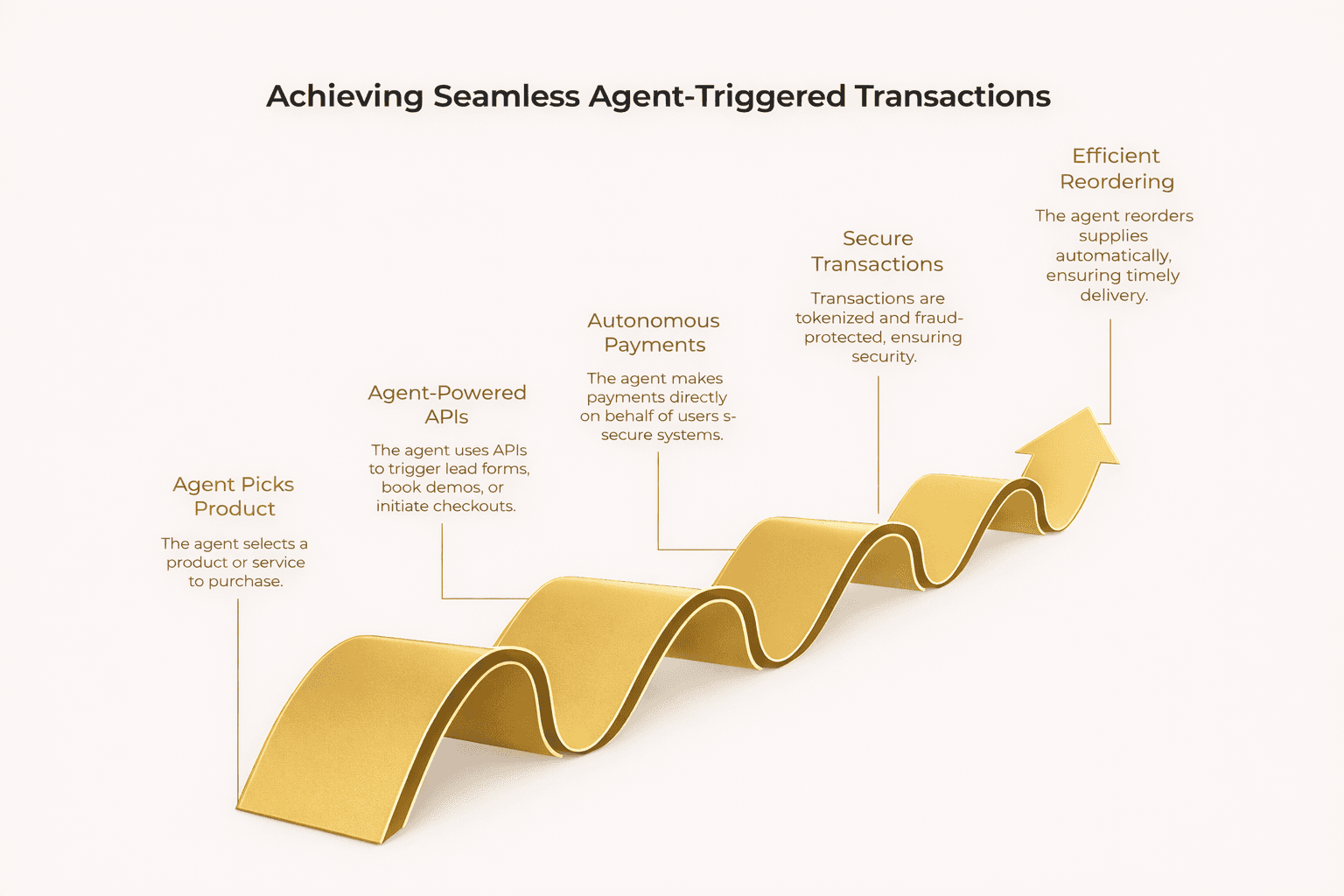
How AI Shopping Agents Work and Why They Matter for Growth
Dec 10, 2025
Nikki Diwakar
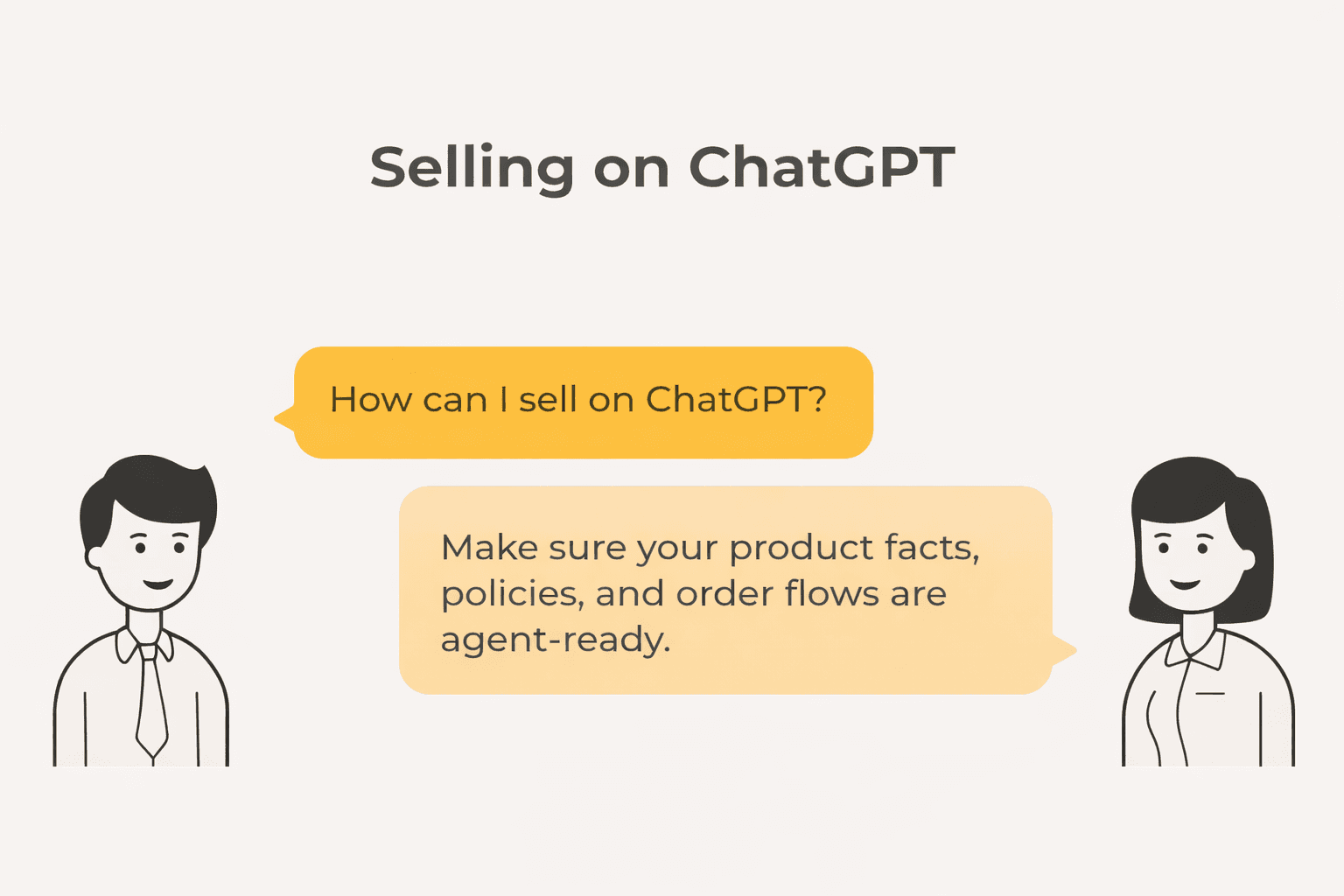
How to Sell on ChatGPT: A Practical Guide to AI Commerce in 2026
Dec 4, 2025
Neeraj Jain
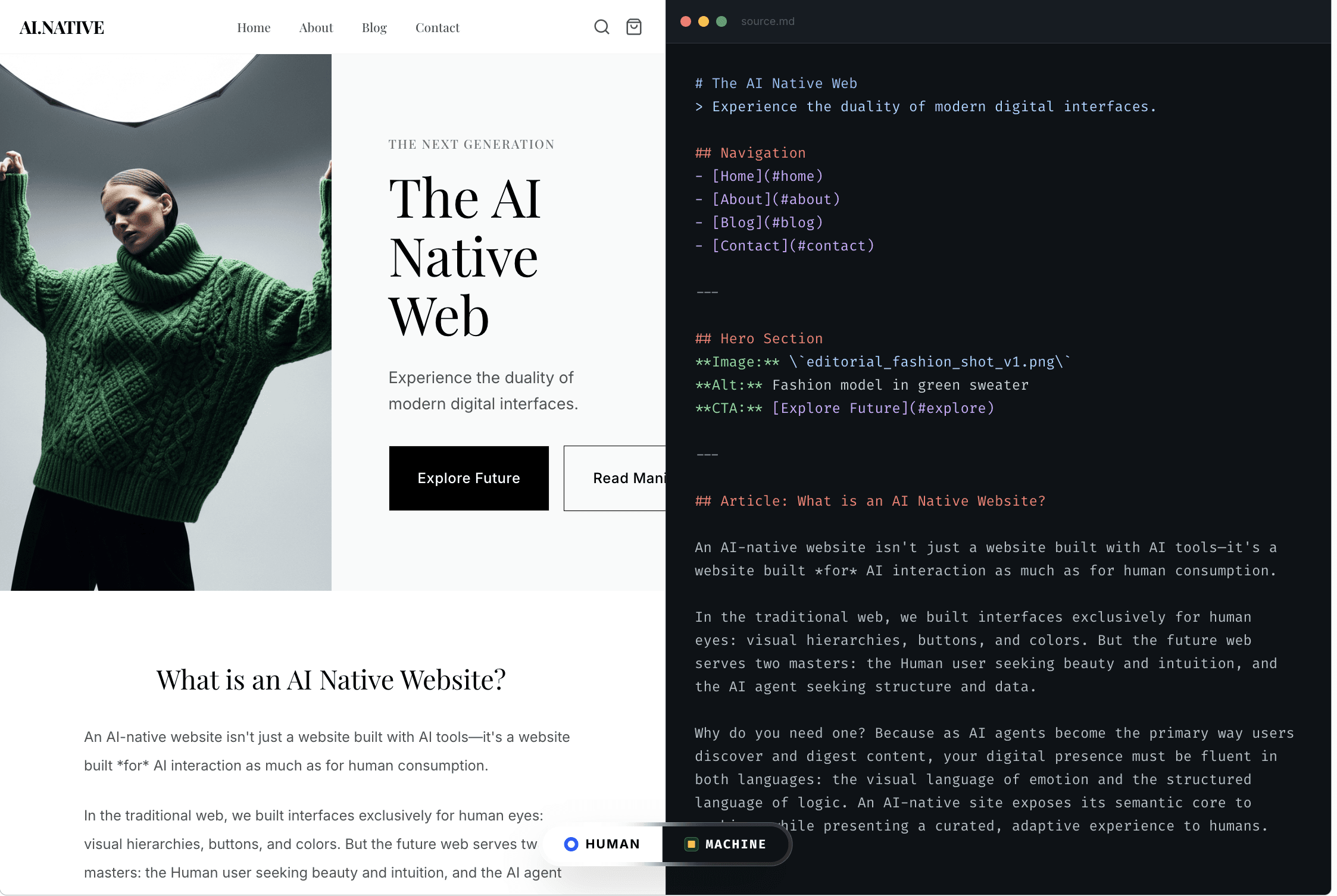
What is an AI-native website and why do you need one?
Nov 30, 2025
Ankit Biyani
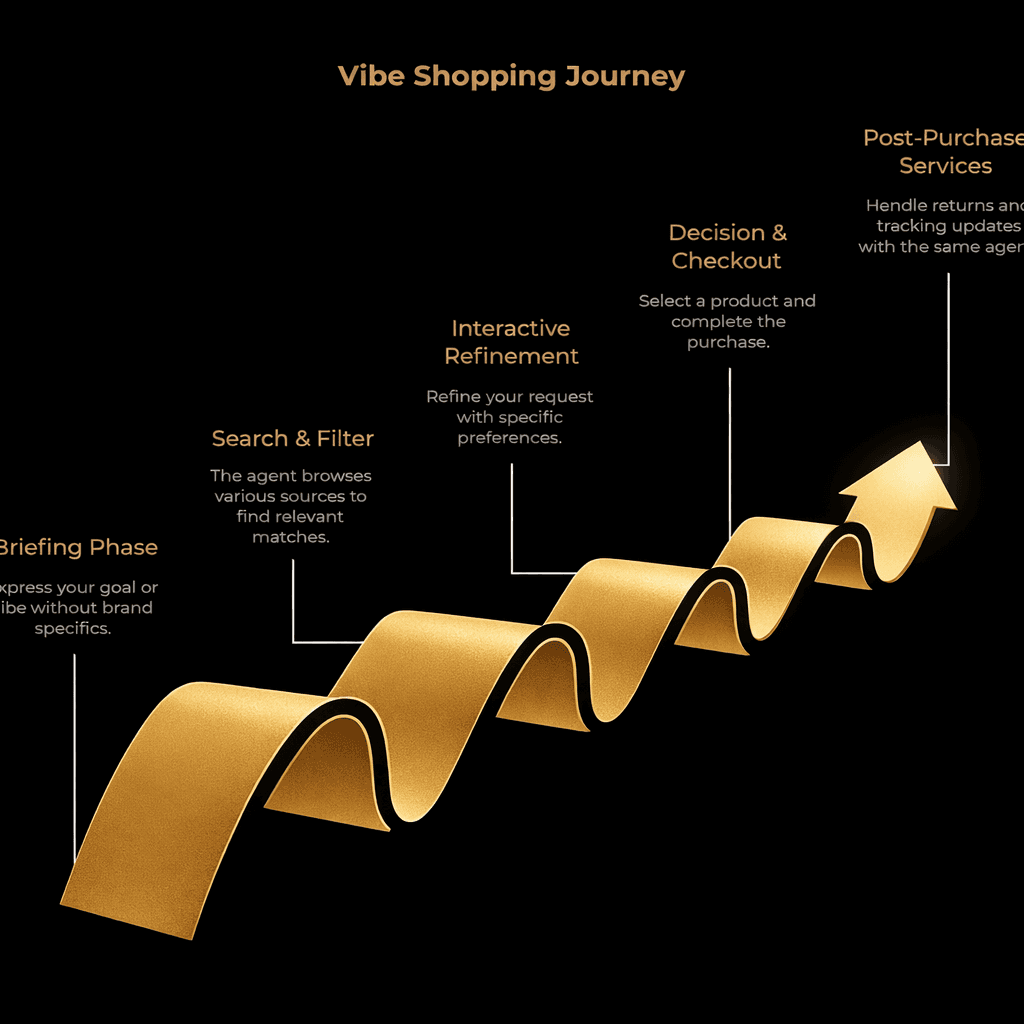
What Is Vibe Shopping and Why It Matters for Ecommerce Strategy
Nov 21, 2025
Neeraj Jain
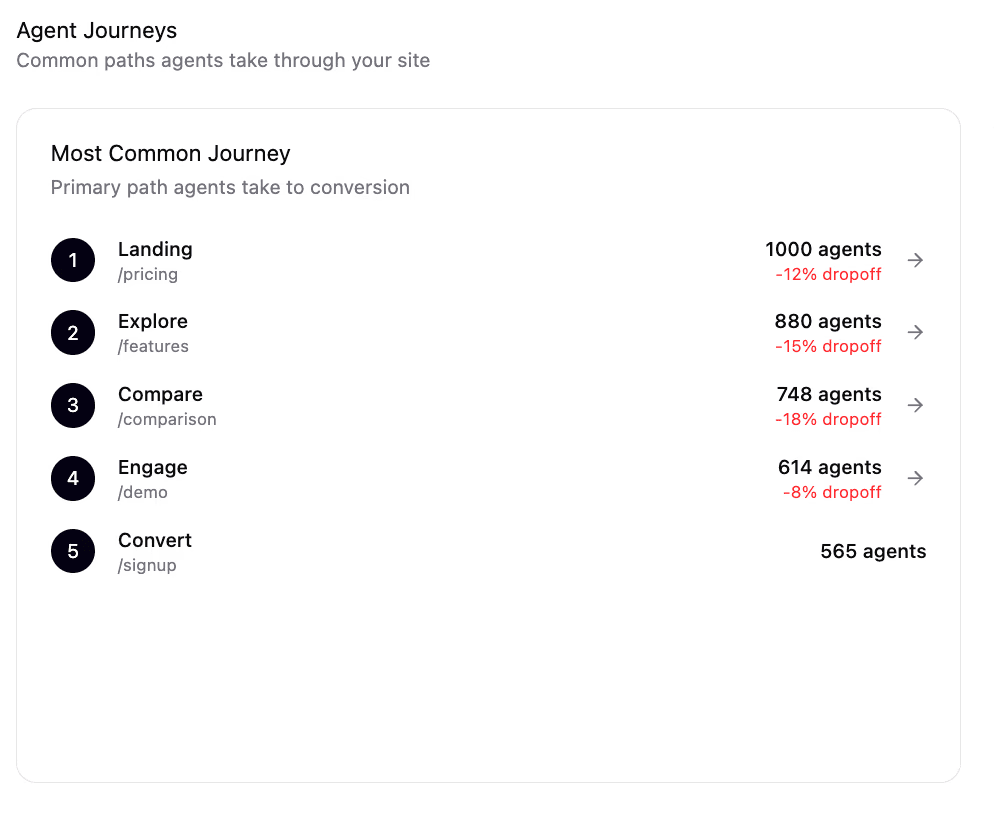
What your analytics misses: >20% of your “traffic” could be AI agents
Nov 18, 2025
Nikki Diwakar
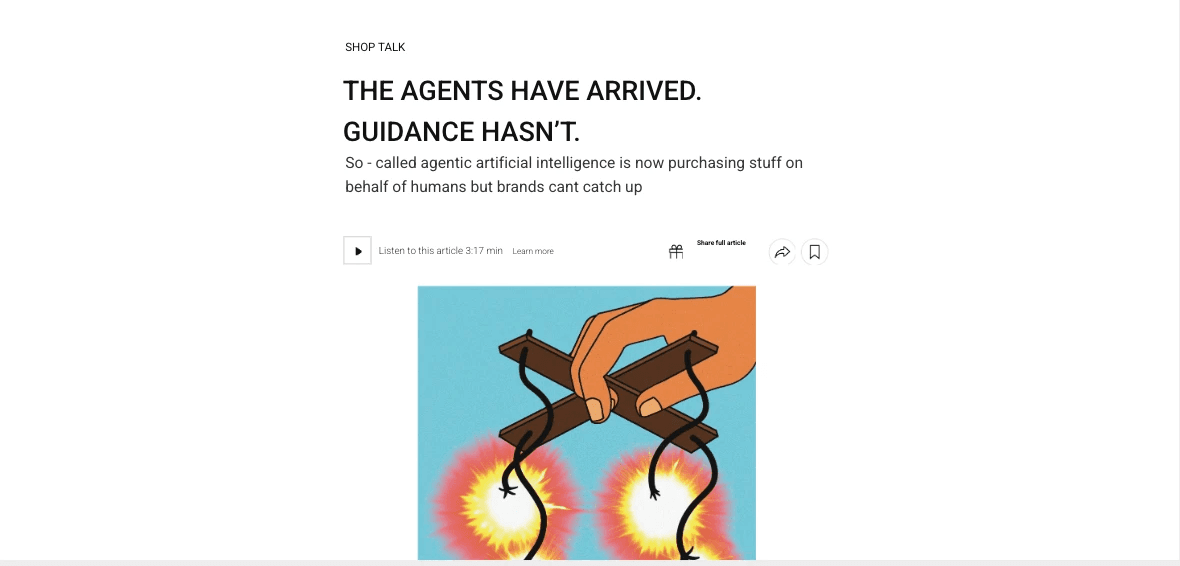
Delegated Traffic: When AI agents own 80% of the buyer journey
Oct 21, 2025
Neeraj Jain