Nov 30, 2025
AI agents are no longer hypothetical assistants. They are evolving into decision engines that discover, compare, and transact on behalf of users. Visa Intelligent Commerce is an infrastructure designed to enable secure, personalized, and controlled transactions when an AI agent acts for a consumer.
Legacy payments and checkout flows assume a human at the wheel. In agentic commerce that assumption breaks. Without infrastructure tailored for secure agent-mediated transactions, merchants and platforms risk friction, abandoned purchases, and compromised conversions.
This article explains the structural gap Visa is addressing, the core components of its Intelligent Commerce solution, and what this means for product, growth, and payments teams navigating the transition to AI-driven commerce.
The Challenge of Commerce in an Agentic World
Agents Are Different Buyers
AI agents do not behave like humans on a website. They identify options, compare alternatives, and execute instructions programmatically. Traditional checkout flows assume:
human navigation
manual form entry
typed credentials
sequential decision making
AI agents collapse these steps into workflows that require automation, authentication, and trust. Traditional payments rails cannot confidently authorize transactions initiated by an autonomous agent without additional safeguards.
Friction at Checkout is a Strategic Barrier
Today, even when an agent can find the right product, the transaction still depends on:
entering payment info repeatedly
navigating multiple merchant checkout experiences
manually authorizing purchases
This friction undermines agent efficiency and increases abandonment. Visa’s solution targets this structural bottleneck by enabling secure, seamless agent transactions.
Visa’s Intelligent Commerce Solution
What It Actually Is
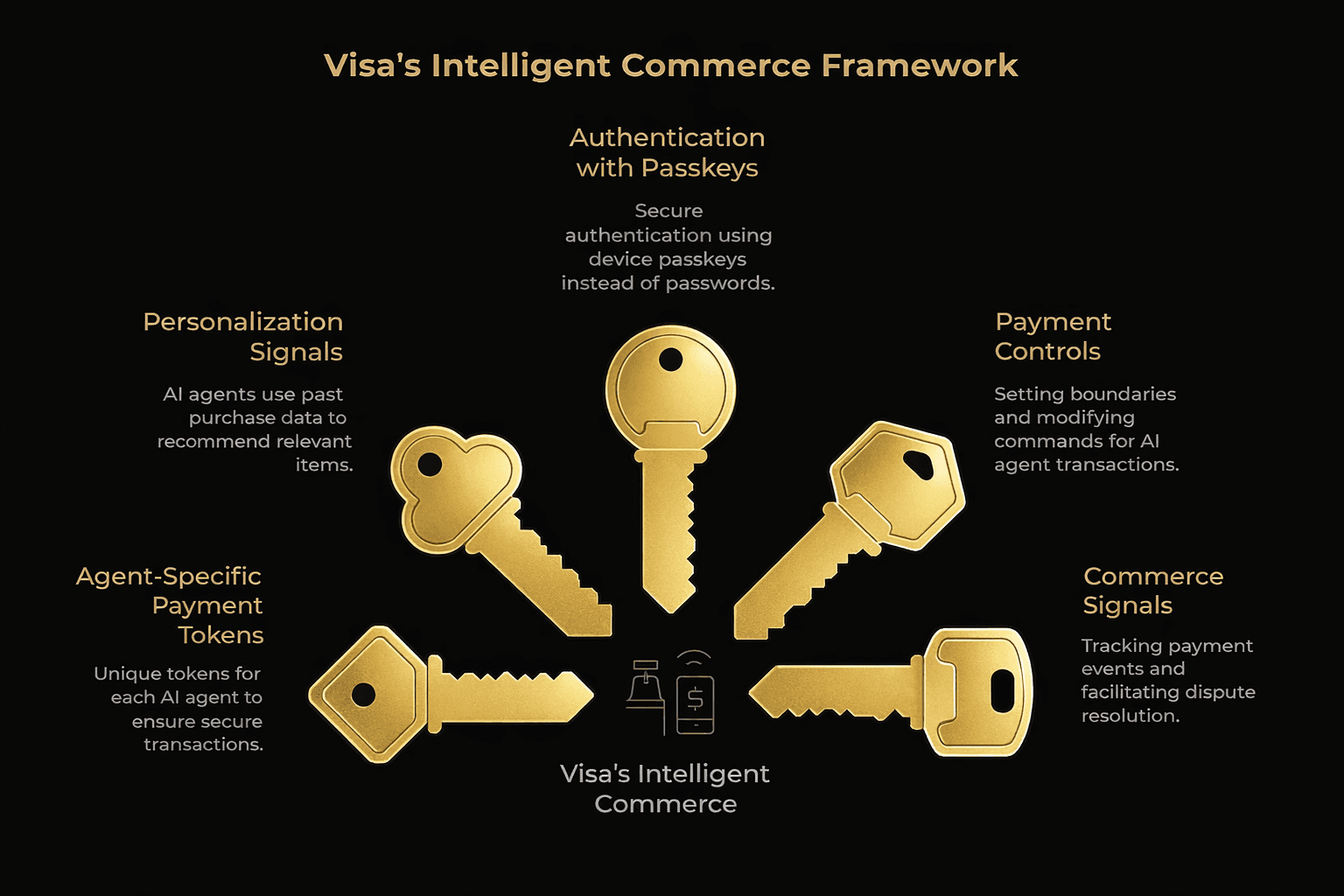
Visa Intelligent Commerce is a suite of APIs and tools that let AI agents:
Obtain agent-specific payment tokens tied to user credentials
Use personalization signals with user consent to tailor recommendations
Authenticate purchases using strong, device-based keys
Enforce consumer-controlled transaction policies
Track payment events and handle disputes programmatically
These components create a trust and control layer that enables agents to complete purchases securely and with the user’s explicit consent.
Agent-Specific Tokenization
By issuing tokens unique to each agent and merchant, Visa isolates risk and prevents replay attacks or credential reuse. Consumers never expose raw card numbers, and agents cannot deviate from pre-defined scopes.
Personalization with Consent
Agents that act with insight make better decisions. Visa’s APIs let agents use permitted signals from a user’s history to tailor recommendations while respecting privacy and user limits.
Secure Authentication
Instead of passwords or repeated card entry, Visa uses passkeys and device-based authentication to verify intent. This is faster and less error-prone for users.
A Real-World Scenario
Julie is planning a trip. Instead of manually searching hotels, comparing prices, and entering payment details, she tells her assistant:
“I want a four-star hotel under 12,000 INR per night with a pool.”
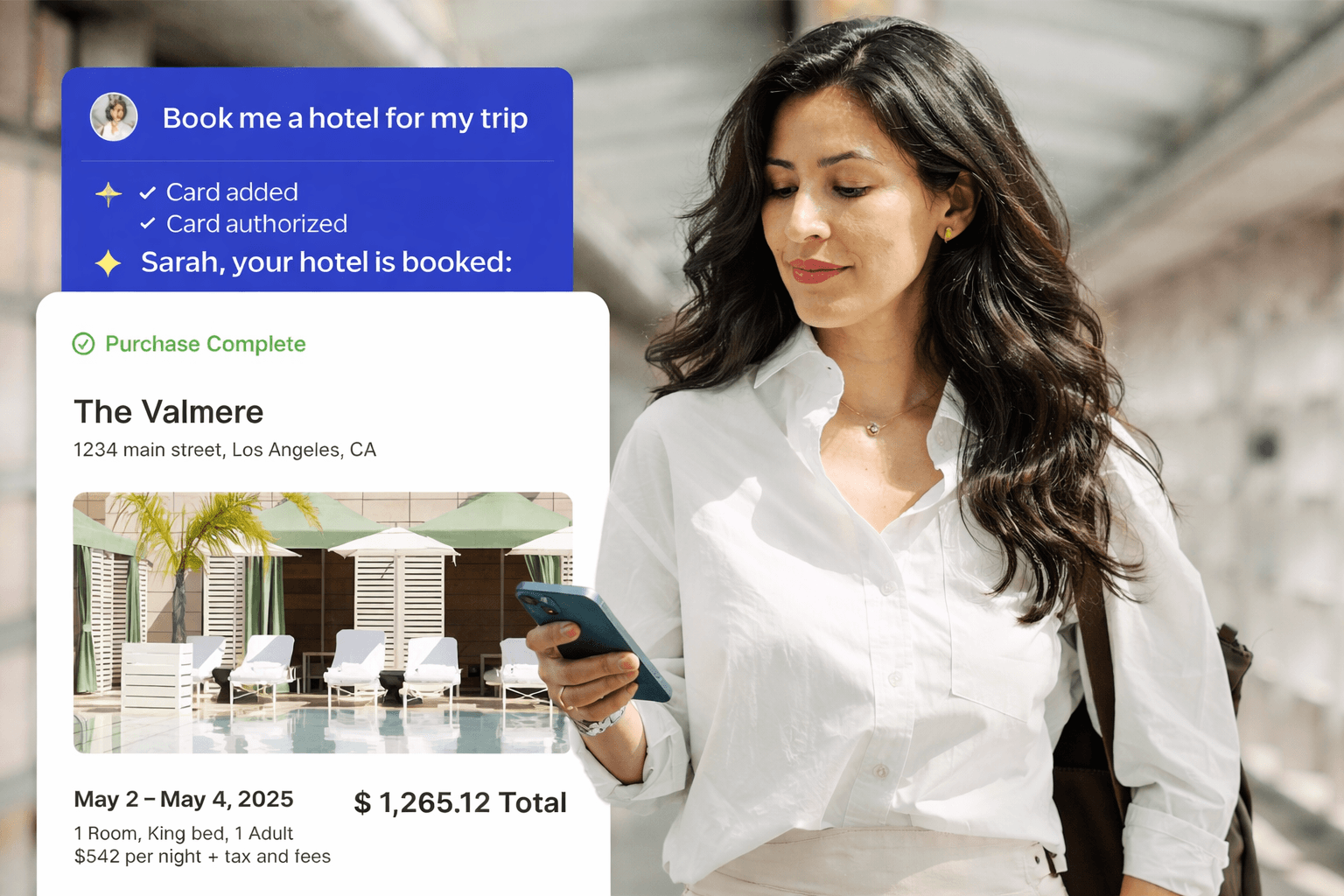
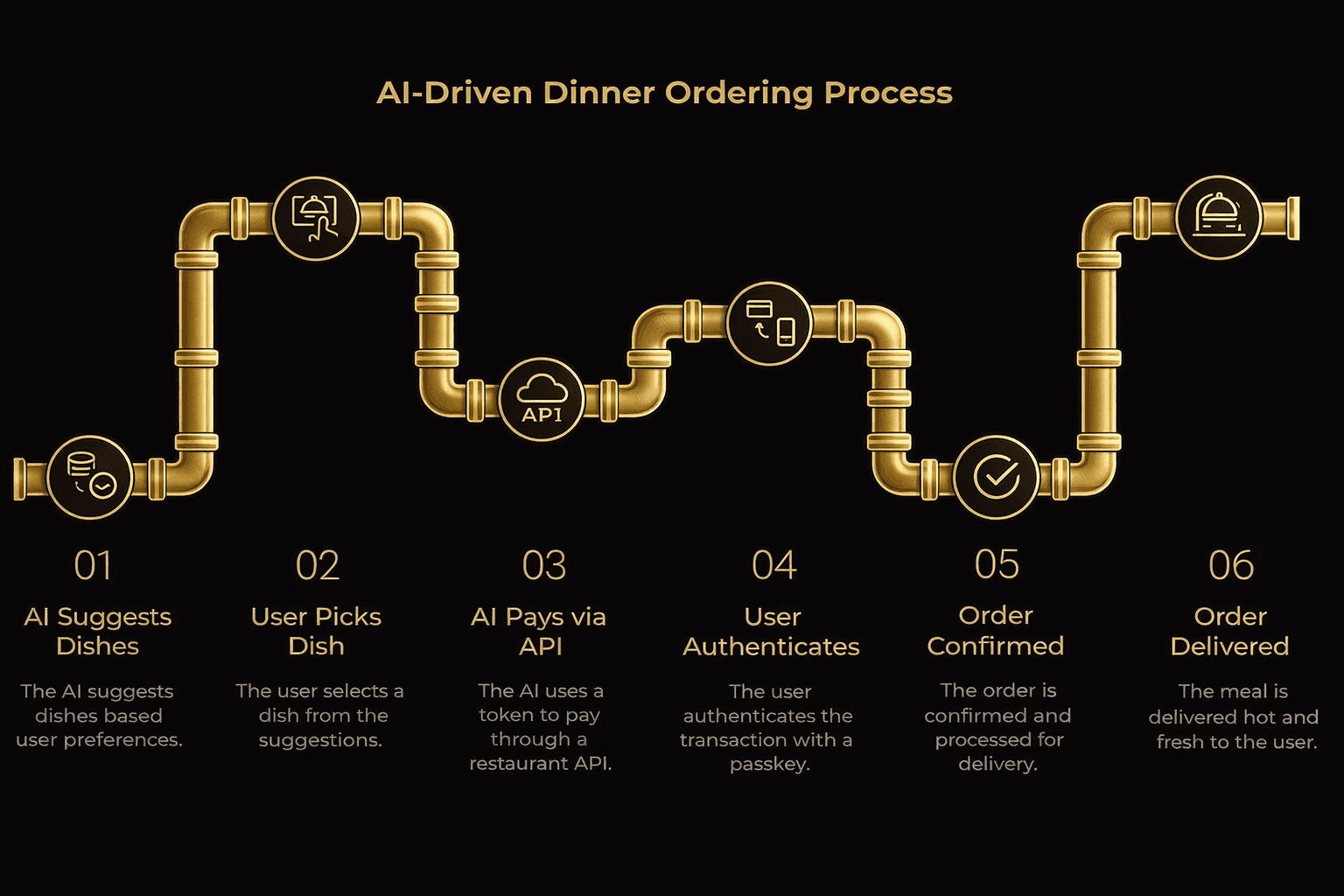
The agent fetches options, uses personalization cues, applies her constraints, and asks her to authenticate via a secure passkey. Behind the scenes:
The agent requests a token
Visa issues a scoped token tied to Julie’s card
The agent applies consumer rules
Julie authorizes with a passkey
Visa confirms the transaction and feeds progress back
No repeated entry. No context switching. Secure and seamless.
Why Visa Intelligent Commerce Matters Now
1. AI is Already Shopping
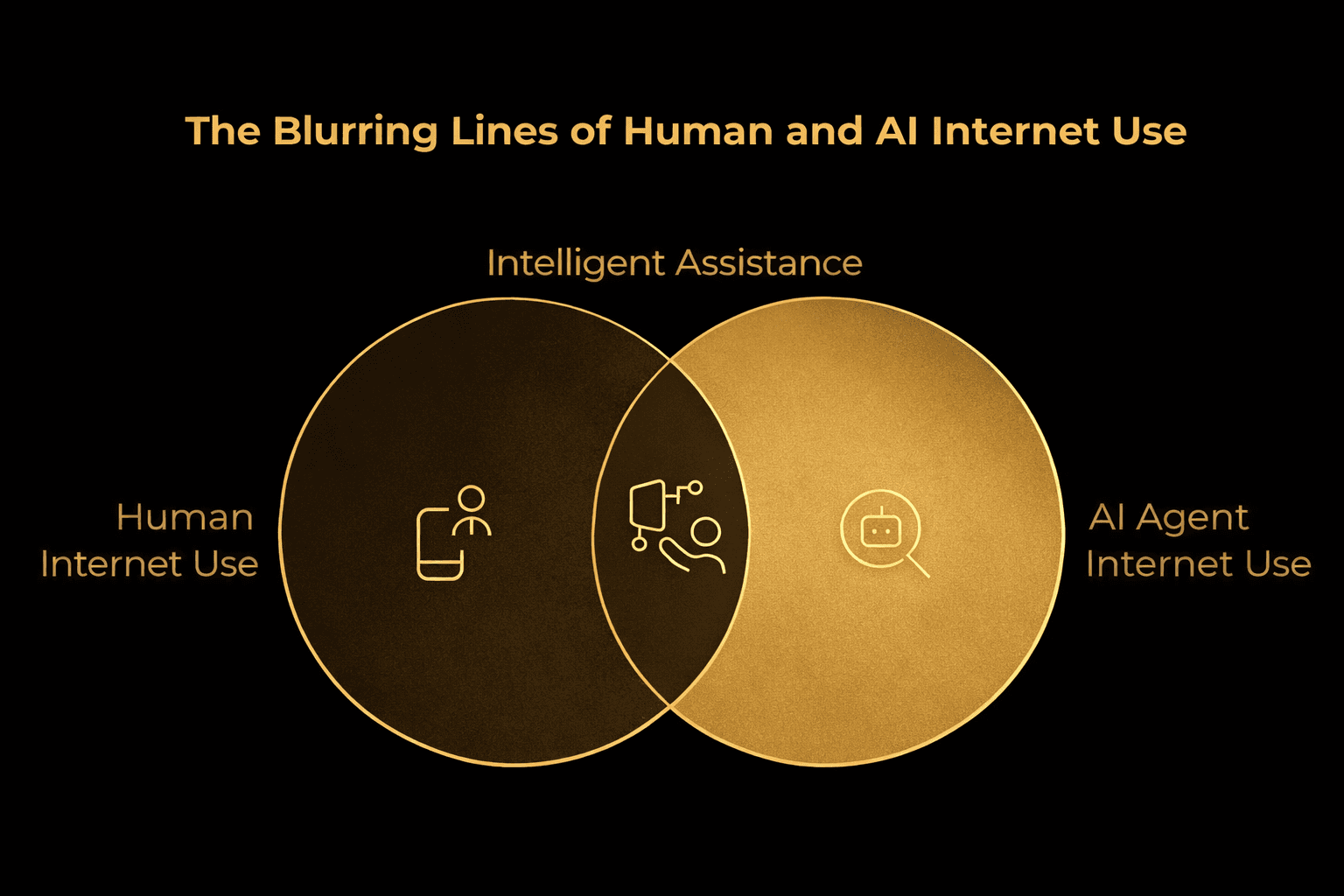
Visa and industry data suggest a growing share of commerce signals now originate from AI agent activity, with agents handling product discovery, comparisons, and price evaluations ahead of transaction execution.
Without infrastructure that supports secure agent-initiated transactions, merchants risk losing conversions at the moment of purchase.
2. Security Cannot Be an Afterthought
Agents accelerate commerce but expose new risk vectors. Tokenization, credential isolation, and authentication controls are foundational to reducing fraud while enabling automation at scale.
3. Personalization Is Now Operational
Where personalization used to optimize recommendations, in agentic commerce it drives decisions. Agents can only be effective if they respect user preferences, limits, and identity.
Visa’s APIs make that explicit and enforceable.
Strategic Implications for Product and Growth Leaders
If you believe AI agents will influence or complete transactions at scale:
Payments and checkout cannot be an afterthought
Personalization must operate within security and consent frameworks
Analytics must surface agent-mediated conversions, not just human clicks
Teams that adopt agentic commerce infrastructure early will reduce friction and capture a larger share of AI-triggered purchase flows.
Practical Execution: What Should Teams Do Next
Map transaction flows triggered by AI agents
Identify where agents interact with discovery and checkout and quantify drop-off points.Integrate secure tokenization protocols
Implement agent-specific tokens to isolate risk and reduce friction.Adopt passkey and strong authentication mechanisms
Replace repeated entry of credentials with secure, fast user intent verification.Instrument analytics to capture agent-mediated conversions
Standard dashboards miss agent workflows. Build tracking around API events and secure transactions.Educate stakeholders
Align product, security, payments, and growth teams on the economics and risks of agentic commerce.
Visa Intelligent Commerce is not a feature set. It is an infrastructure response to the structural shift in commerce from human-driven purchase flows to agentic, automated transactions. Secure tokens, consent frameworks, authenticated intent, and personalized signals are the primitives that make this shift practical.
The teams that treat agentic commerce as a strategy, not an experiment, will lead in conversion velocity, customer experience, and growth in the era of autonomous commerce.
Read more from our blog
Agentic Interfaces and the Future of UX
Jan 28, 2026
By Nikki Diwakar
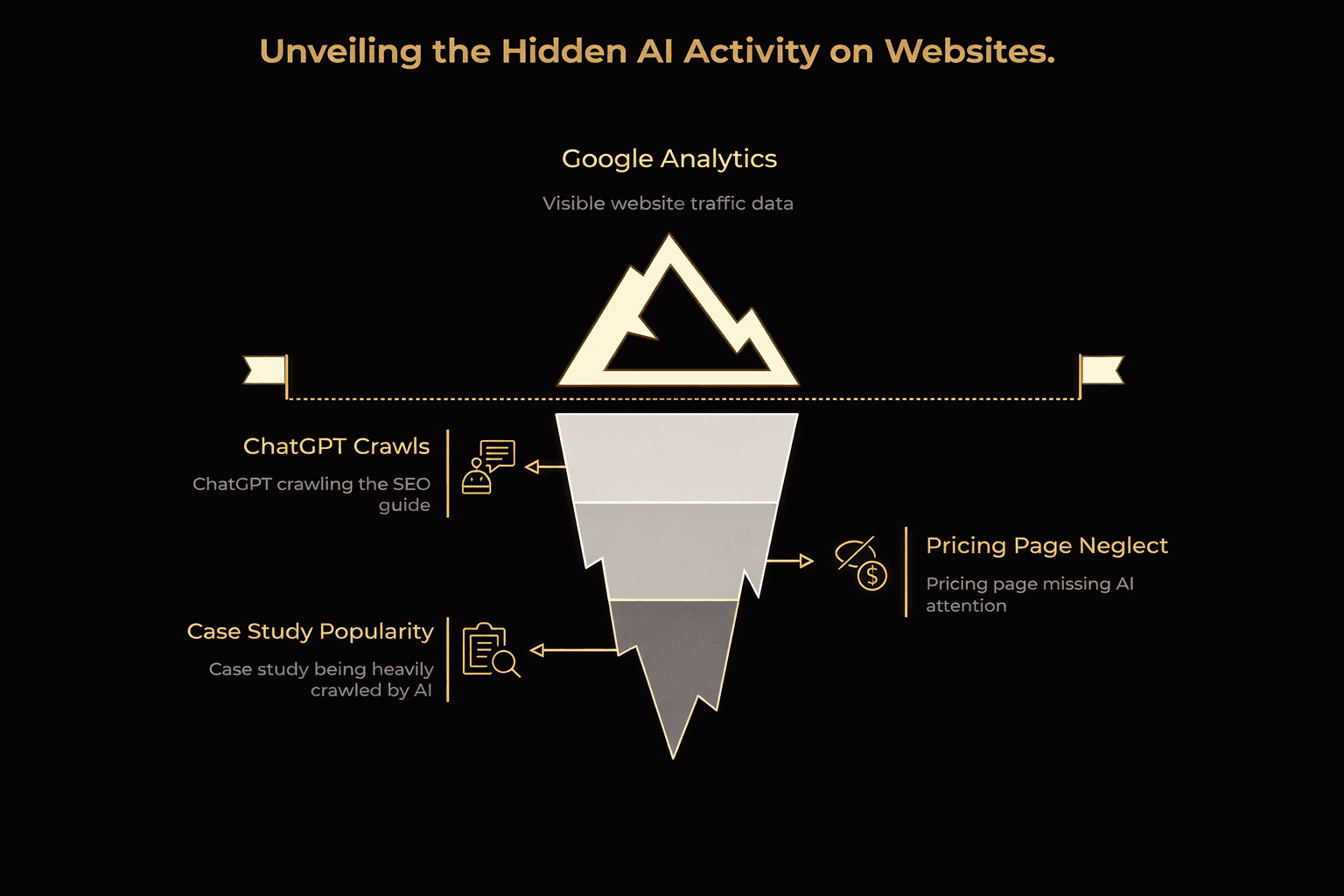
How To Measure AI Agents When Google Analytics Cannot
Jan 23, 2026
By Nikki Diwakar
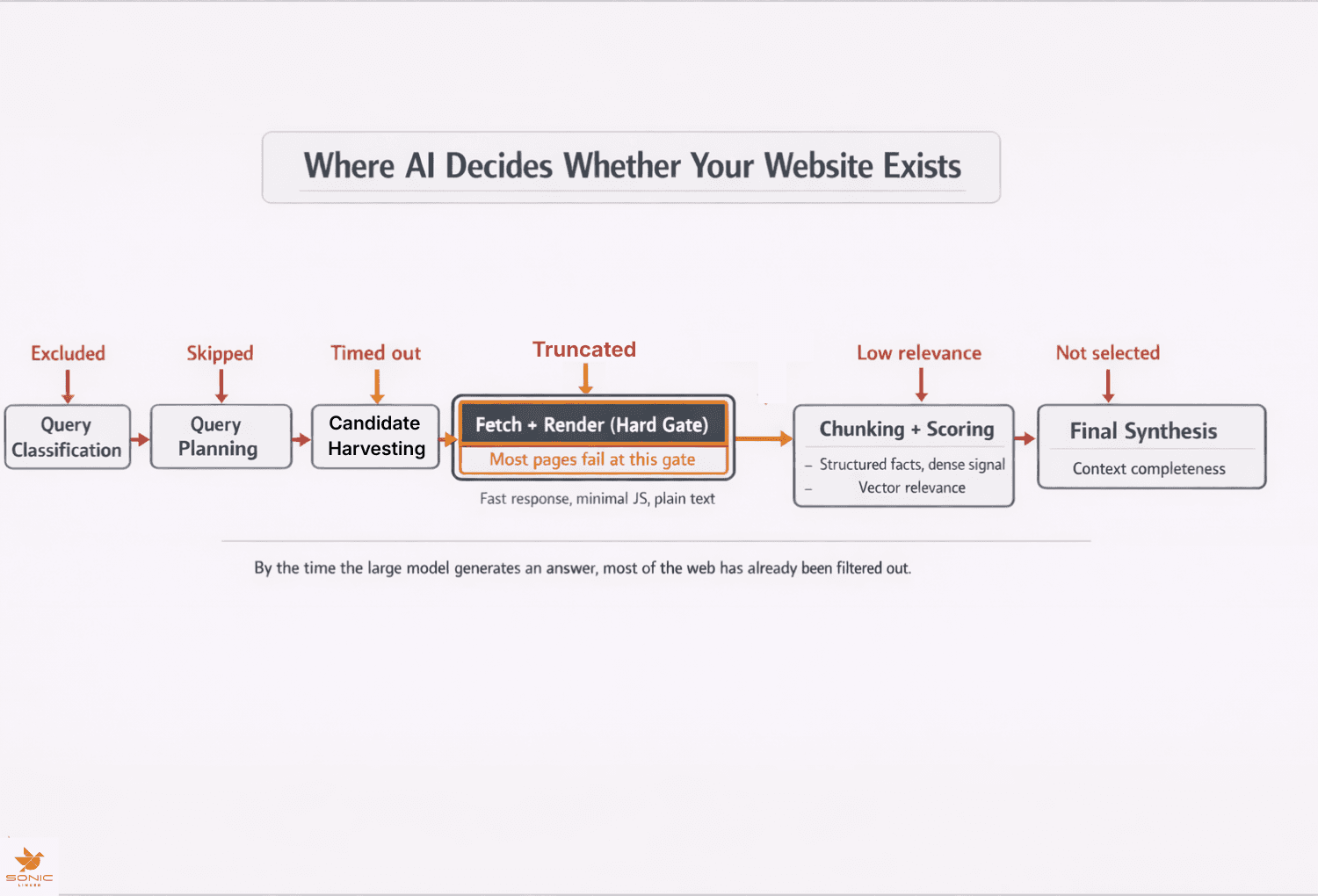
How ChatGPT Finds and Chooses Websites
Jan 21, 2026
By Nikki Diwakar
How LLMs Discover Your Model Context Protocol and Why It Matters
Jan 19, 2026
By Nikki Diwakar

What You Should Know About Shopify’s Model Context Protocol
Jan 13, 2026
By Nikki Diwakar
B2A Commerce Explained: Winning in an Era of AI Shopping Agents
Jan 12, 2026
By Nikki Diwakar
Agent-First Product Strategy: Building for AI Users, Not Humans
Jan 7, 2026
By Nikki Diwakar
Agentic Commerce Interfaces: How AI Agents Are Rewriting the Buying Experience
Jan 5, 2026
By Nikki Diwakar
ChatGPT Apps just changed how customers buy (quietly)
Dec 31, 2025
By Nikki Diwakar
How AI Shopping Agents Change the Sales Funnel and Key Metrics
Dec 26, 2025
By Nikki Diwakar

AEO vs. GEO: The New Rules for AI Search Visibility
Dec 15, 2025
By Nikki Diwakar
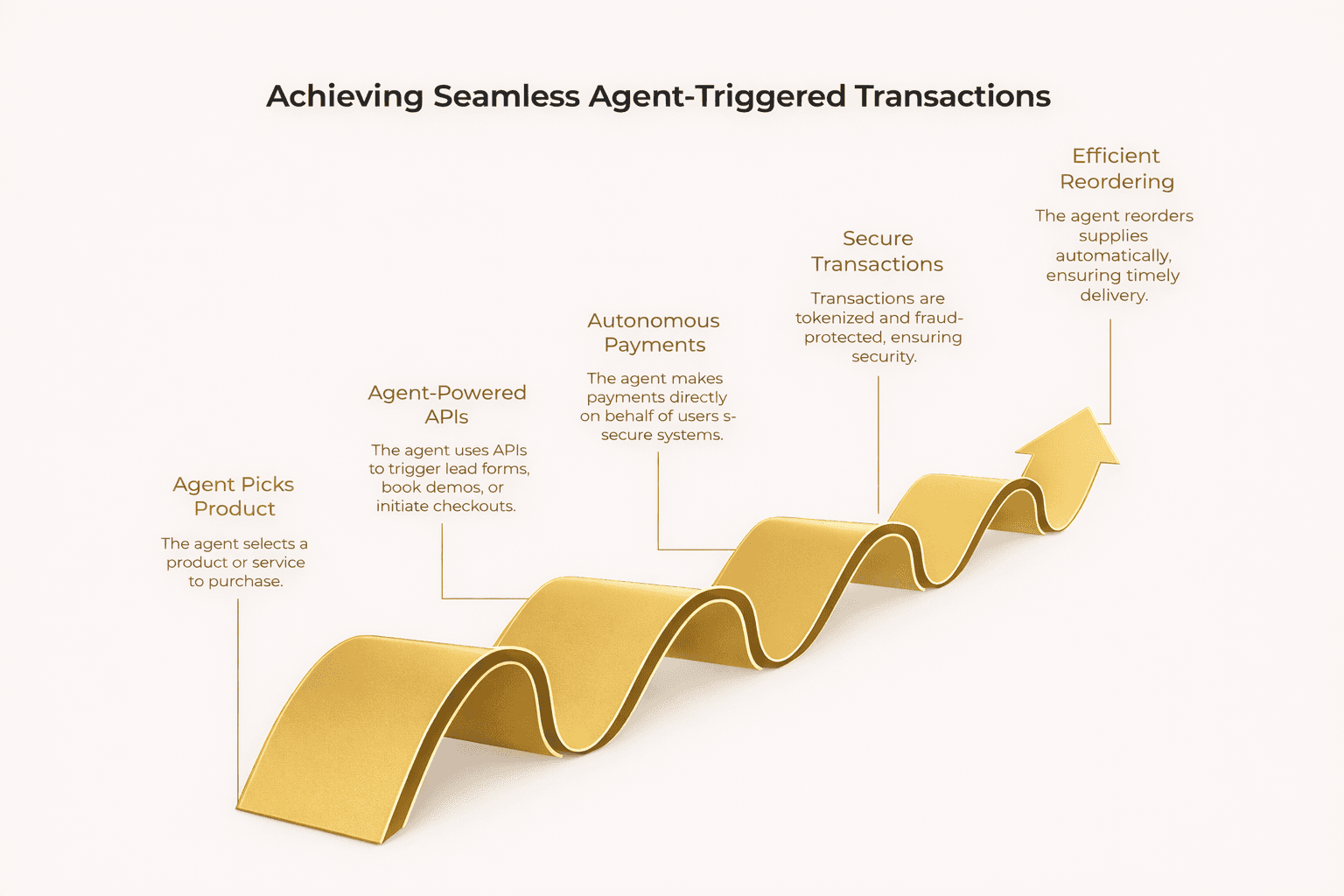
How AI Shopping Agents Work and Why They Matter for Growth
Dec 10, 2025
By Nikki Diwakar
How to Sell on ChatGPT: A Practical Guide to AI Commerce in 2026
Dec 4, 2025
By Nikki Diwakar
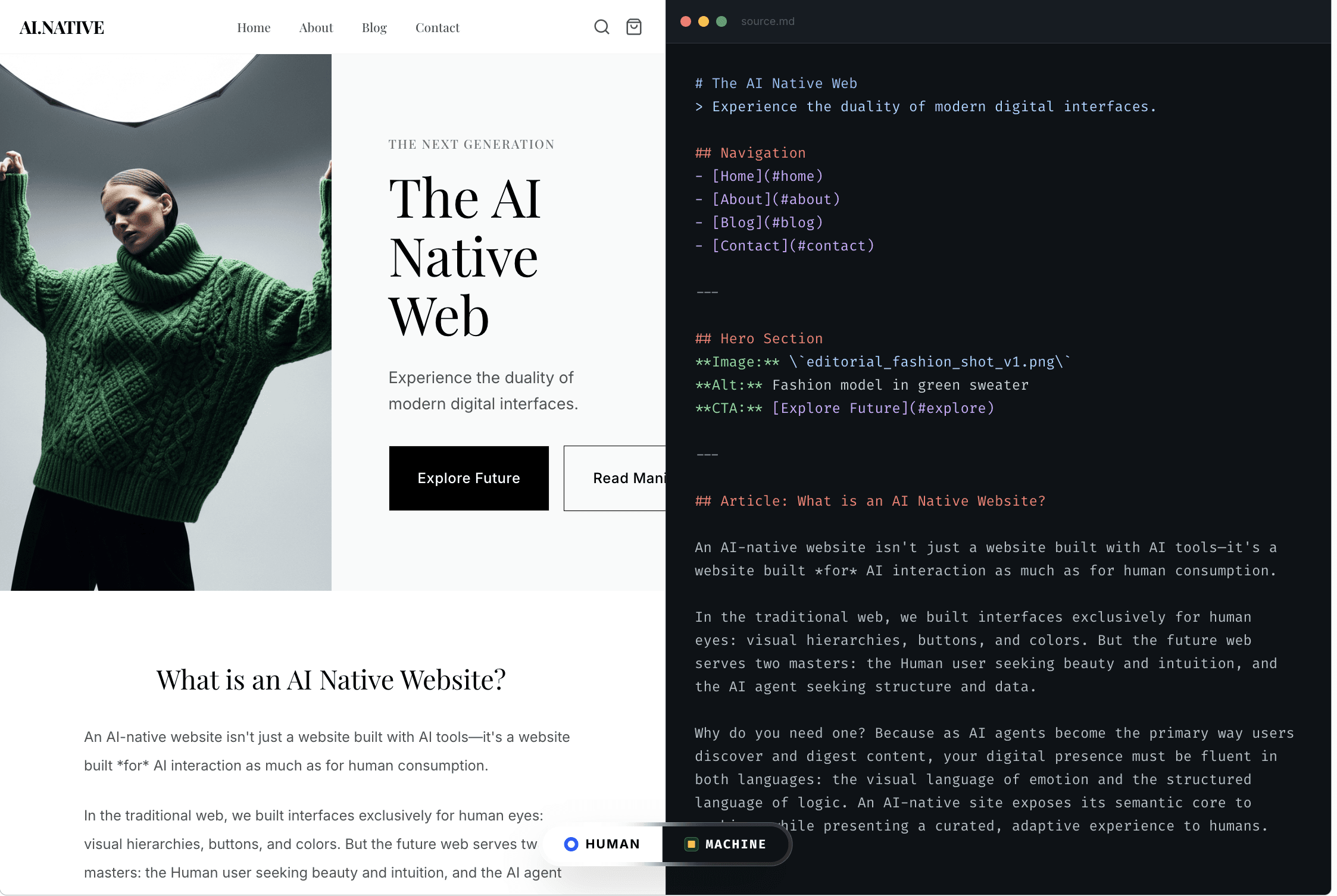
What is an AI-native website and why do you need one?
Nov 30, 2025
By Nikki Diwakar
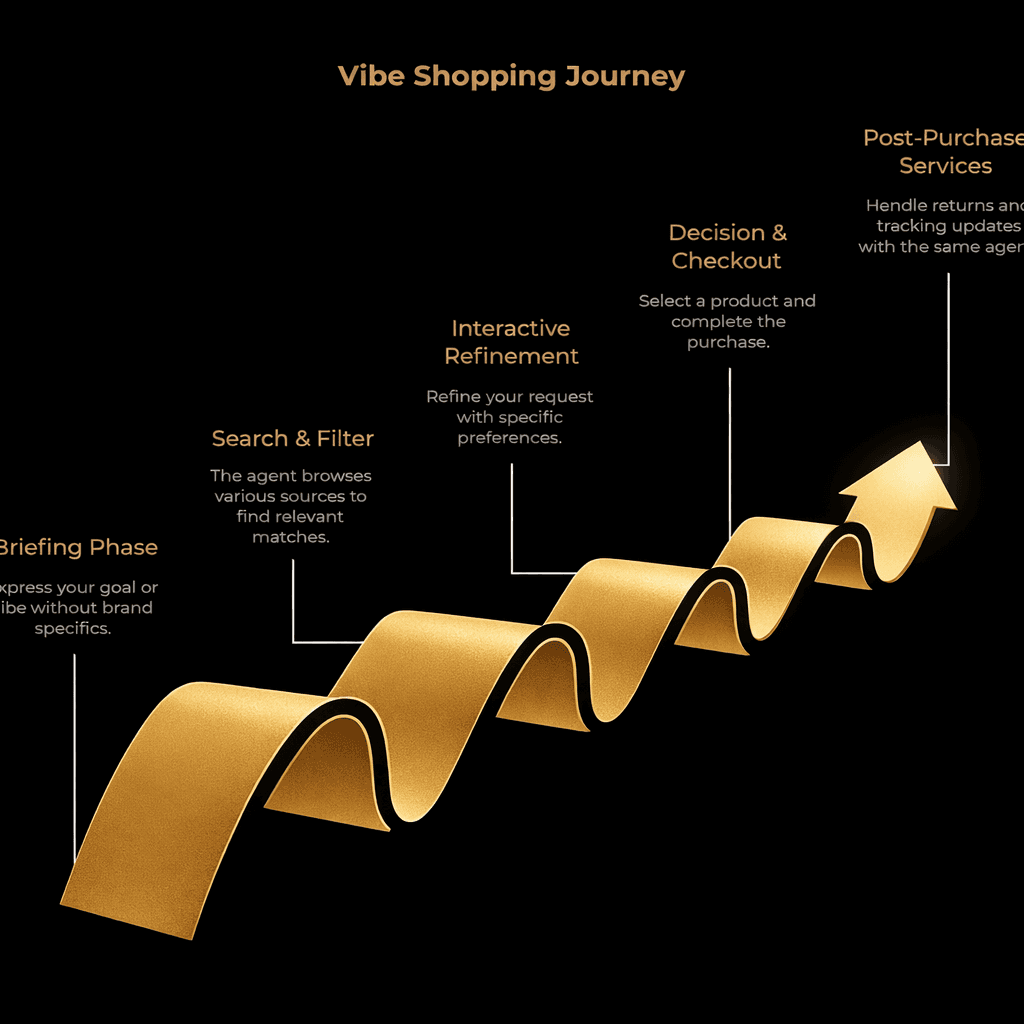
What Is Vibe Shopping and Why It Matters for Ecommerce Strategy
Nov 21, 2025
By Nikki Diwakar
What your analytics misses: >20% of your “traffic” could be AI agents
Nov 18, 2025
By Nikki Diwakar

Delegated Traffic: When AI agents own 80% of the buyer journey
Oct 21, 2025
By Nikki Diwakar