Nov 30, 2025

Delegated Traffic: When AI Agents Own 80% of the Buyer Journey
TLDR of This Article
The message is simple:
More and more buyers are delegating the hard work of research and comparison to AI agents.
Those agents now own most of the journey, even though your analytics only see the last click.
If you don’t build an AI-native layer and instrument delegated traffic, you’re playing the wrong game.
The choice is pretty stark:
Either you optimise to be in the AI shortlist,
or you keep polishing a website that only the people who already found you will ever see.
The Old Funnel Is Dead (It Just Hasn’t Told You Yet)
The classic story we all still tell ourselves:
Customer has a problem → searches → opens a few tabs → reads pages → compares → chooses.
That’s already wrong for a big chunk of users.
The new reality:
Customer has a problem → asks ChatGPT / Perplexity / Claude →
the agent opens dozens of sites, reads them, shortlists options →
customer gets 3–5 recommendations with links → clicks 1–2.
The research, comparison, and shortlisting are now happening off your website.
By the time a human shows up in your analytics, 80% of their journey is already done somewhere else, by an AI agent acting on their behalf.
That’s delegated traffic.
What Is “Delegated Traffic”?
Delegated traffic = buyers outsourcing the research part of the journey to an AI agent, then only showing up on your site at the very end.
Concretely:
Human asks the agent:
“Best vitamin C serums for sensitive skin on a budget?”
or
“Top payroll SaaS for 20–200 person startups.”The agent:
crawls 20–50 websites
scrapes product, pricing, reviews, and policies
decides which brands are “safe and relevant”
builds a shortlist
The agent answers with:
3–7 brand recommendations
citations and links
The human clicks one or two links to “confirm” and buy.
That human session you see in GA?
It’s not “top of funnel”.
It’s confirmation at the bottom of a delegated journey you don’t see.
Why Delegated Traffic Is Not Just “Another Referral Channel”
You might be tempted to treat AI assistants like “just another referrer” (like Google or Instagram).
That’s the wrong mental model.
Search shows 10 blue links and says:
“Here are all the results, you decide.”
Agents say:
“I checked the internet for you. Here are 3 brands I trust for your use case.”
Key differences:
Much more aggressive compression
From “hundreds of results” → “3–5 names”.
If you’re not in those 3–5, you simply don’t exist.
Higher trust in the shortlist
People assume the agent already filtered scams, bad fits, and junk.
They use your site to confirm, not to discover.
Opaque upstream competition
You don’t see which brands you beat or lost to.
You just see a visit (or no visit).
Delegated traffic is binary:
Either you make it into the agent’s shortlist,
or you never even get the chance to convince the buyer.
What the Delegated Journey Actually Looks Like
Here’s the real journey you should be designing for:
Problem articulation (in the agent)
The buyer types or speaks their situation into ChatGPT/Perplexity.
This is where categories and “jobs to be done” get defined.
Agent research (off your radar)
The agent hits websites, docs, review sites, blogs, pricing pages.
This is where it tries to read:
what you sell
who it’s for
how it’s priced
whether people trust you
Agent shortlisting (your win or loss moment)
The model decides: “These 3–5 brands are safe and relevant to show.”
Everyone else is silently dropped.
Answer + links (what the human sees)
The user gets a neat summary and a few links.
The model explains why it picked those brands.
Human confirmation visit (what your analytics see)
The human clicks 1–2 of the links.
They skim your page to check:
“Does this feel legit?”
“Is the price fine?”
“Does this match what the agent said?”
Then they buy or bounce.
Your current website and analytics stack are optimised almost entirely for step 5.
Delegated traffic means the battle was mostly won or lost at steps 2–3.
Why This Changes How You Build and Measure
If agents own most of the journey, a few big implications:
1. Being “pretty” is not enough
Humans love the black backdrop, big imagery, glowing CTAs.
Agents don’t care.
They need:
clear product/category definitions
explicit pricing and plan details
review counts and proof
strong, unambiguous “best for X” signals
If that’s not encoded in a way they can read from your HTML / structured content, you lose the shortlist, no matter how nice the site looks.
2. Late-funnel optimisation has diminishing returns
You can keep A/B testing:
button colour
hero headline
form length
…but if the agent never picks you in the first place, those improvements are just rearranging furniture in an empty store.
Delegated traffic forces you to move effort upstream:
optimise what agents see and understand about you
measure if they keep you in more answers
treat “AI citations” as seriously as “SEO rankings”
3. Attribution needs a new layer
Right now you see:
“Direct from chat.openai.com”
“Referral from perplexity.ai”
maybe nothing (if referrers are stripped)
But you don’t see:
which other brands were in the answer
what the model said about you
how many times you weren’t mentioned at all
To handle delegated journeys, you need:
agent traffic analytics (who crawled what, when)
answer-level visibility (where you’re cited, how you’re framed)
click + conversion tracking tied to those answers
Otherwise you attribute a sale to “Direct” and miss that the real work was done by an assistant that already pre-sold the user.
What You Can Do About It (Without Rebuilding Everything)
You don’t need a new website. You need a new layer and a new lens.
1. Add an AI-native layer on top of your existing site
For human browsers:
keep your current UX, brand, layout.
For AI agents:
serve a clean, structured view that explicitly encodes:
products and categories
pricing and packaging
who you’re best for
reviews, ratings, proof
policies (returns, shipping, guarantees)
This is exactly what you’re doing with SonicLinker’s AI-native pages:
same URLs, same visuals for humans, but a machine-readable layer for agents.
2. Instrument delegated traffic as its own thing
Put an agent-aware layer at your CDN/edge that:
identifies AI crawlers
logs which pages they hit
tracks when those agent visits are followed by human clicks
gives you dashboards for “agent sessions” and “AI → human funnels”
This is your delegated traffic analytics stack.
3. Treat agents as a new persona
Start writing and structuring content with an explicit persona:
“What does an AI agent need to see to confidently recommend us?”
They care about:
clarity
completeness
consistency
conflict-free facts
Build an internal checklist for “agent readiness” of any key page:
Can an agent summarise what we do in one sentence?
Can it answer “who is this best for?” from the page alone?
Can it see pricing bands and key trade-offs?
Can it see enough proof to call us trustworthy?
If the answer is no, that page is weak in a delegated journey, even if humans like it.
How Delegated Traffic Will Look in 12–24 Months
Fast-forward a bit and this is normal:
Teams have “Agent Visibility” in their weekly metrics.
CMOs ask:
“How often are we recommended in ‘best X for Y’ prompts?”
“Which AI platforms send us the most revenue?”
“Which content changes improved our presence in assistant answers?”
Websites have a human and Ai native version with pages like:
“AI-native plans” (pricing tuned for how agents compare options)
“Agent explainer sections” (short, structured blocks for models)
internal playbooks on “How we improve our brand’s representation in AI answers”.
At that point:
Not tracking delegated traffic will sound as outdated as not tracking mobile traffic in 2012.
SEO alone will not be enough; AEO (Agentic Experience Optimisation) will sit beside it.
Read more from our blog
Agentic Interfaces and the Future of UX
Jan 28, 2026
By Nikki Diwakar
How Visa Enables AI Agents to Shop and Pay
Jan 26, 2026
By Nikki Diwakar
How To Measure AI Agents When Google Analytics Cannot
Jan 23, 2026
By Nikki Diwakar
How ChatGPT Finds and Chooses Websites
Jan 21, 2026
By Nikki Diwakar
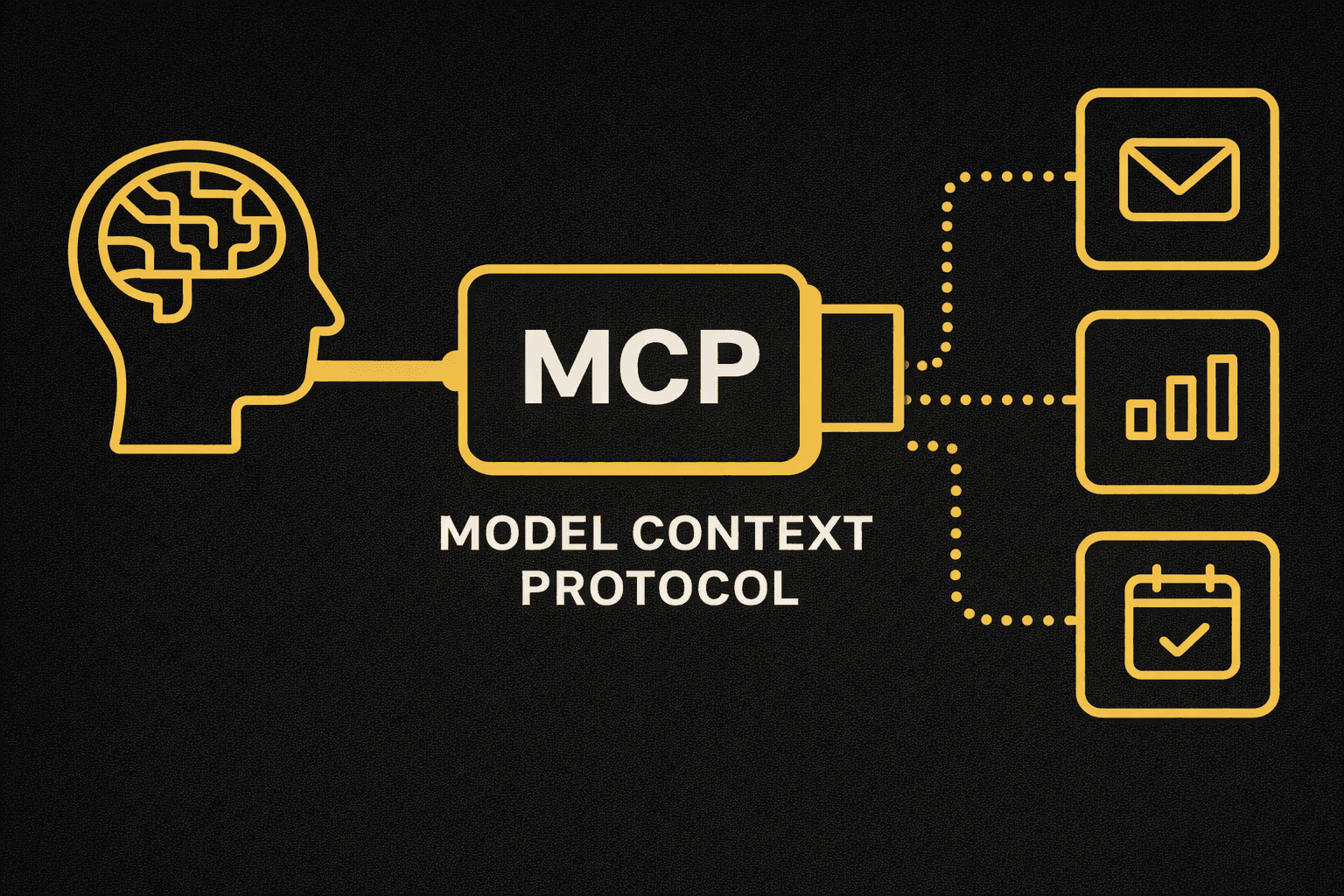
How LLMs Discover Your Model Context Protocol and Why It Matters
Jan 19, 2026
By Nikki Diwakar

What You Should Know About Shopify’s Model Context Protocol
Jan 13, 2026
By Nikki Diwakar
B2A Commerce Explained: Winning in an Era of AI Shopping Agents
Jan 12, 2026
By Nikki Diwakar
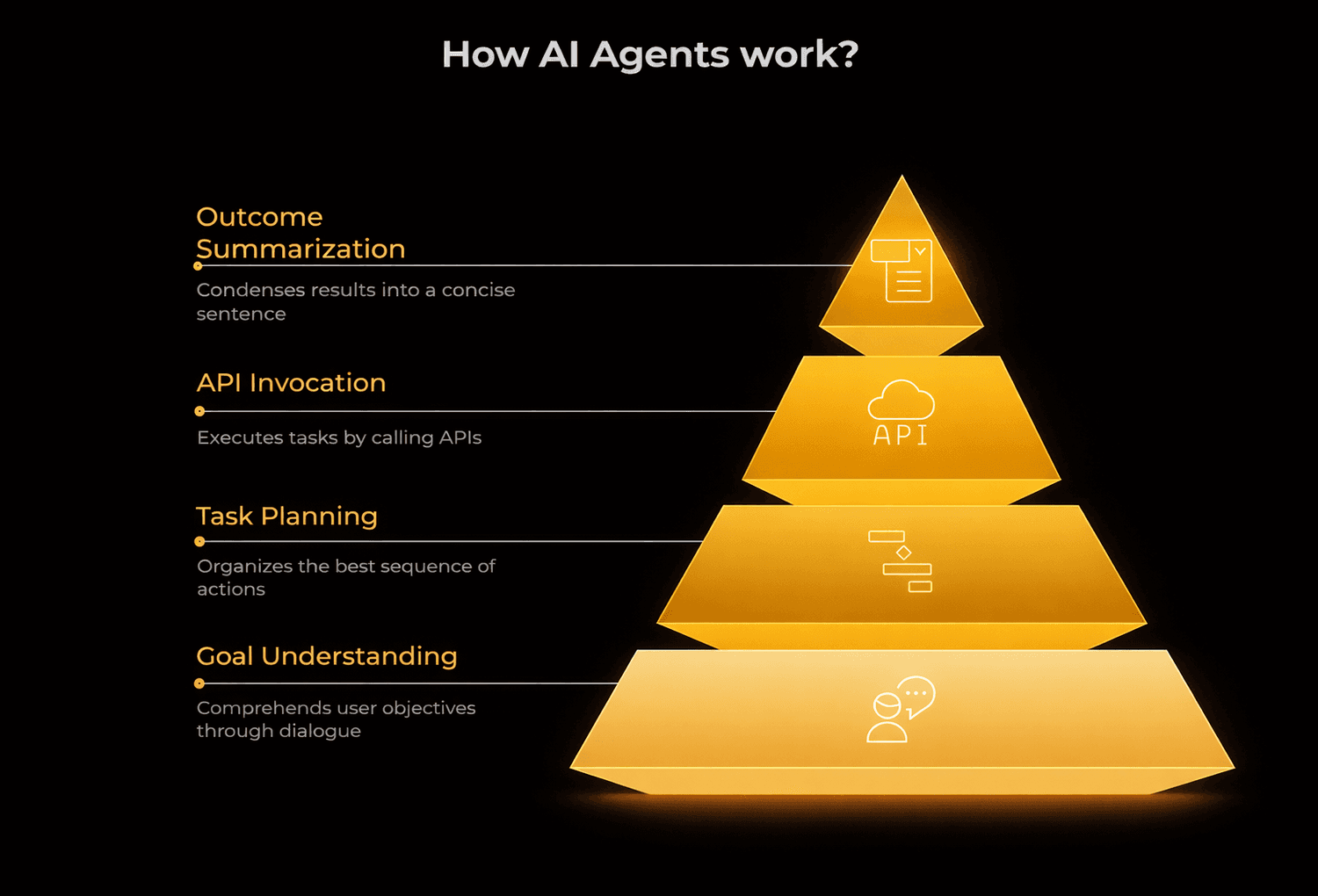
Agent-First Product Strategy: Building for AI Users, Not Humans
Jan 7, 2026
By Nikki Diwakar
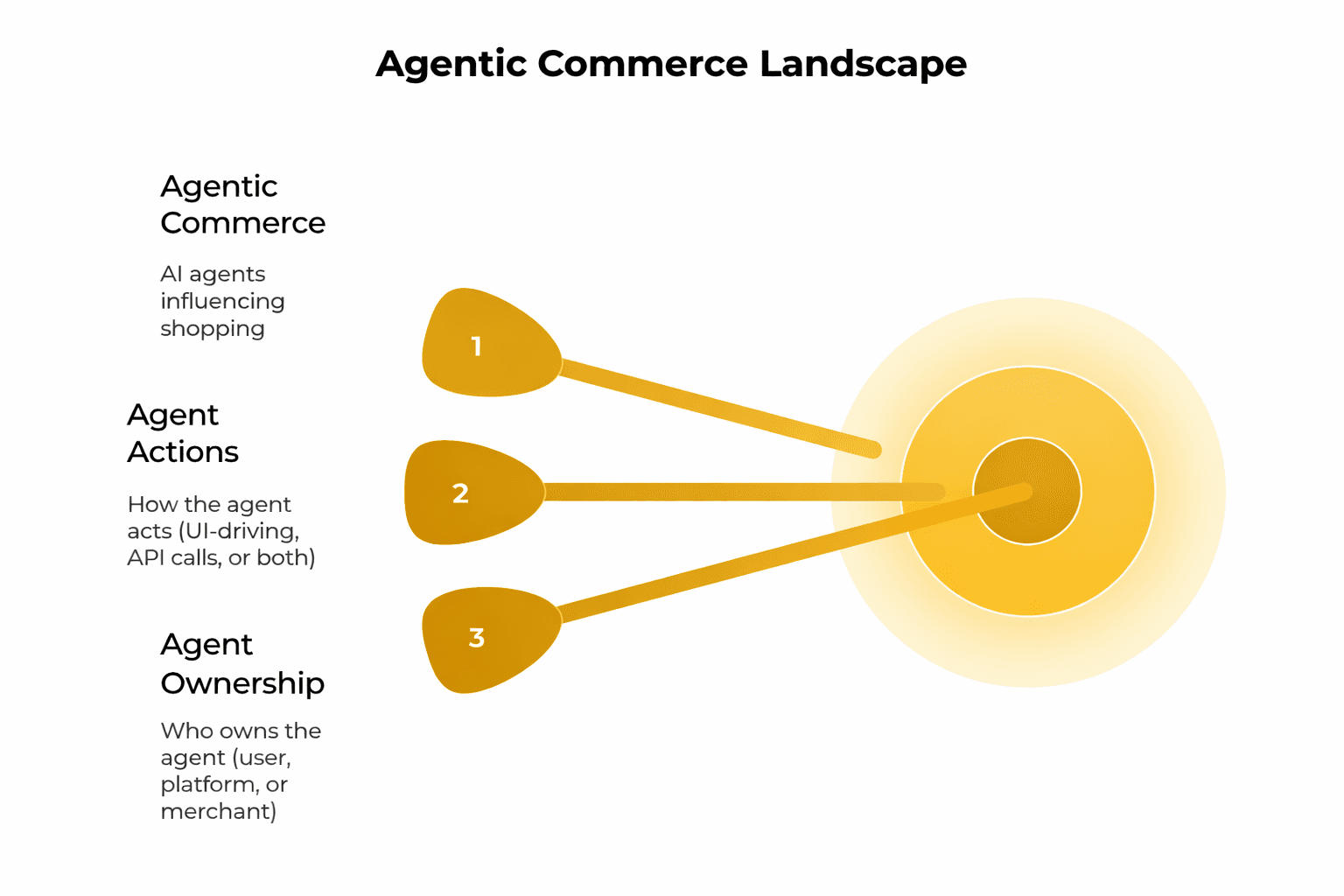
Agentic Commerce Interfaces: How AI Agents Are Rewriting the Buying Experience
Jan 5, 2026
By Nikki Diwakar
ChatGPT Apps just changed how customers buy (quietly)
Dec 31, 2025
By Nikki Diwakar
How AI Shopping Agents Change the Sales Funnel and Key Metrics
Dec 26, 2025
By Nikki Diwakar
AEO vs. GEO: The New Rules for AI Search Visibility
Dec 15, 2025
By Nikki Diwakar
How AI Shopping Agents Work and Why They Matter for Growth
Dec 10, 2025
By Nikki Diwakar
How to Sell on ChatGPT: A Practical Guide to AI Commerce in 2026
Dec 4, 2025
By Nikki Diwakar
What is an AI-native website and why do you need one?
Nov 30, 2025
By Nikki Diwakar
What Is Vibe Shopping and Why It Matters for Ecommerce Strategy
Nov 21, 2025
By Nikki Diwakar
What your analytics misses: >20% of your “traffic” could be AI agents
Nov 18, 2025
By Nikki Diwakar